Cross Cultural Dreaming and Healing
This blog emerged from a discussion of cross-cultural dreaming in the Dream Study Groups Program of the International Association for the Study of Dreams.
I would not actually say I'm familiar with dream sharing in different cultures. If I follow Stan Krippner's definition of culture, though, we are practicing cross-cultural dreaming all the time. “Stanley Krippner defined culture as a particular group's shared way of life.” Since communication on the internet is also a way of life, the cultures I met are sharing overarching means of communication — the internet, social platforms — so I would speak of a global online dreaming culture, too.
Since the dream groups I'm participating in always follow non-authoritarian approaches to dream interpretation, I only get a certain type of dreaming cultures, or of members willing to share in such a context. I recall conflicts in one or two groups about dream interpretation, which were rooted in certain religious traditions and authoritative ways of dealing with symbols. Back then it was clear we can't tolerate such approaches in international, non-confessional groups. Still, I had the impression that such a system can make sense, and gets meaningful results and effects for the members of that particular culture.
So I don't think my online dream groups include all cultures, but for sure different sub-cultures and nations, globally.
The Power of Friendship
I'd like to supply two examples of the healing power of intercultural dream sharing.
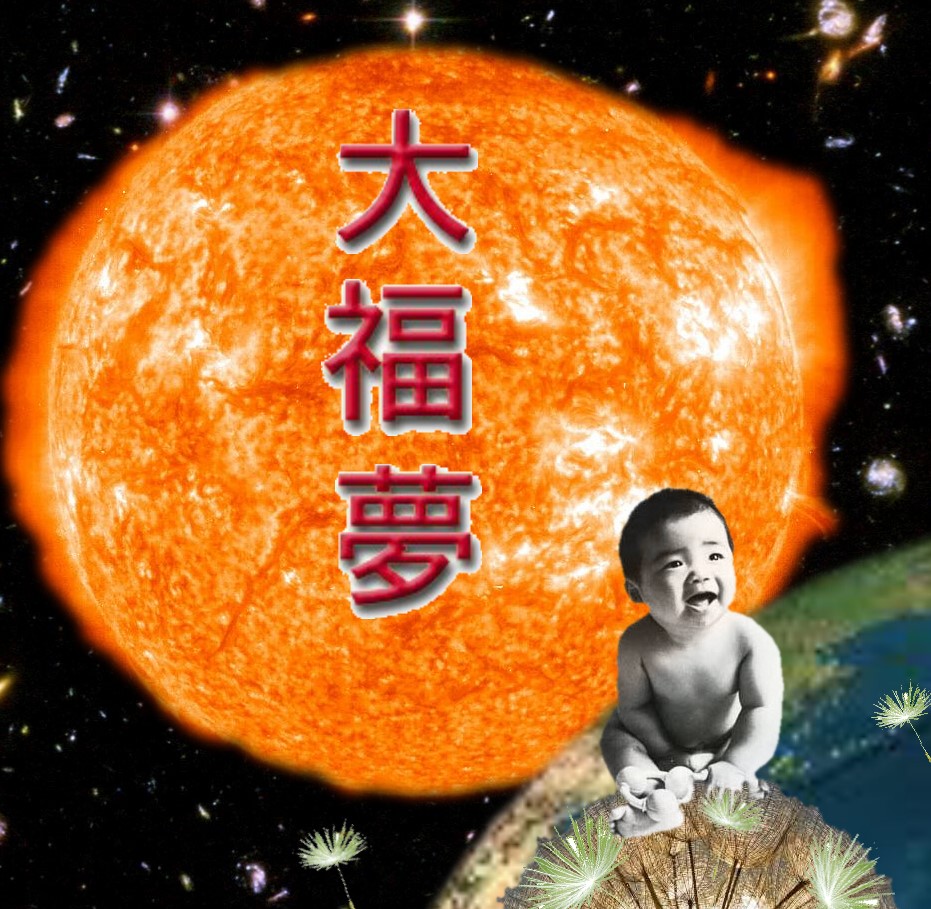
The World Dreams Peace Bridge of Jean Campbell is my longest-standing dream sharing and dream working group (ever since 2003), which has a global focus and the mission “to create a universe in which peace reigns.” We are holding monthly dream-ins for peace and healing, for dreaming up peaceful solutions. When a name for this activity was to be found, two (now deceased) members of our group, May Tung and Kotaro Miyagi, came forward with “Da-Fu Mu,” which is a combination of Japanese and Chinese words meaning “dreams of great fortune.” Apart from this creative act, the exchange between our friends from China and Japan was indeed part of healing the wounds of WW2, through the friendship created on the World Dreams Peace Bridge.
Dreaming Into a Culture
Another surprising example happened in 2011, when I intended to take the idea of Da-Fu Mu out to the wider world, outside of our group. I created a Facebook group, “Dreaming for Japan,” where a crowd of dreamers gathered, focusing on healing intentions in the face of the Fukushima disaster. I recall the electrifying atmosphere — and then this dream happened.
“Forgetful Birdman” — Sunday, March 13, 2011:
In a larger square room, the edges maybe 20 m long, a pillar with a square diameter in the center, maybe 2 m thick. The walls are brown, it is dim. I'm a bird with long white feathers. I'm very long and seemingly I have only rudimentary wings. I'm doing long jumps in the company of other birds looking like me. In our jumps and turns we are moving counter-clockwise around the central pillar. My jumps are so wide that I realize I'm dreaming after some time.
I'm very happy and keep on jumping, turning, dancing. I feel my thin legs and the claws scratching ground. I start to sing, at first only something like ‘lalala’, later on adding ‘I'm dreaming’. I do all this to stay in contact with the dream, knowing I have set my mind to a task. I have childish fun, overflowing with joy.
After feeling quite stable in the dream I remember my task to connect with other dreamers and heal this country. I feel a surge of energy flowing through my body, which now feels of humanoid shape. I intend a spinning movement, and it also happens counter-clockwise, while focusing on the task and visualizing the Asian east coast. I say: ‘I now connect with …’ and can't recall the nation of people I planned focusing on. I think hard and China comes to mind, Korea, and I feel myself waking up physically but don't move, try to get back into the dream holding on to the pictures, to the feeling of dreambody, but it is too late.
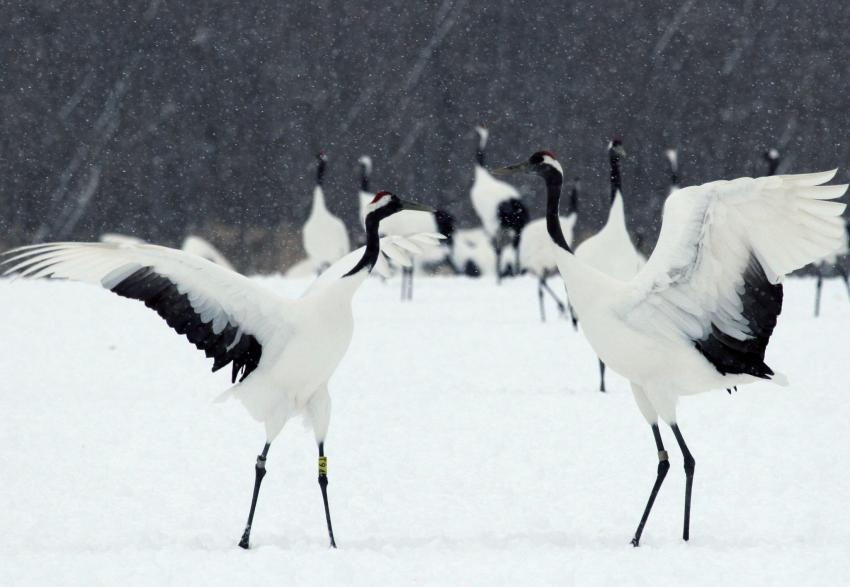
Dream friend Joy from the USA pointed me to the dance of the cranes, which, she wrote, “are a symbol of good fortune, longevity, wishes granted. I think you did connect with Japan, beautifully.”
Years later a dream friend from Brazil pointed me to another detail, and to a kind of conclusion, though the mystery remains. I replied to him:
“Your mention of souls of the departed related to the cranes gives me goosebumps, I wasn't aware. This detail even deepens the mystery around that incubation back then, and how I can't deny I must have tuned in to the collective soul of Japan, and now it seems the ritual in the dream served the passage of the deceased to the afterworld.”
From this ground of experience, I think in the future cross-cultural dreaming may not only play a role in individual healing, but in creating peace between cultures, healing wounds and gaps on a global level. Though the details of a protocol should ensure a safe space for persons with different approaches to dream work, if we actually want to embrace this difference.
IASD Dream Study Group Program: iasdreamcourses.org